Protests Break Out in the Middle of the Pandemic
After more than two months under New York City’s pandemic restrictions—marked by the ever-present uncertainty of COVID-19 and a suspended sense of normal life—the murder of George Floyd by Minneapolis police officer Derek Chauvin ignited a wave of public outrage. Against the backdrop of infections, deaths, isolation, and collective anxiety, people took to the streets, masked and resolute, to protest police brutality. Although the demonstrations were largely peaceful, the atmosphere was fraught: storefronts were boarded in anticipation of unrest, looting and property damage occurred during several nights, and the city imposed a curfew. The visual and emotional character of New York shifted overnight.
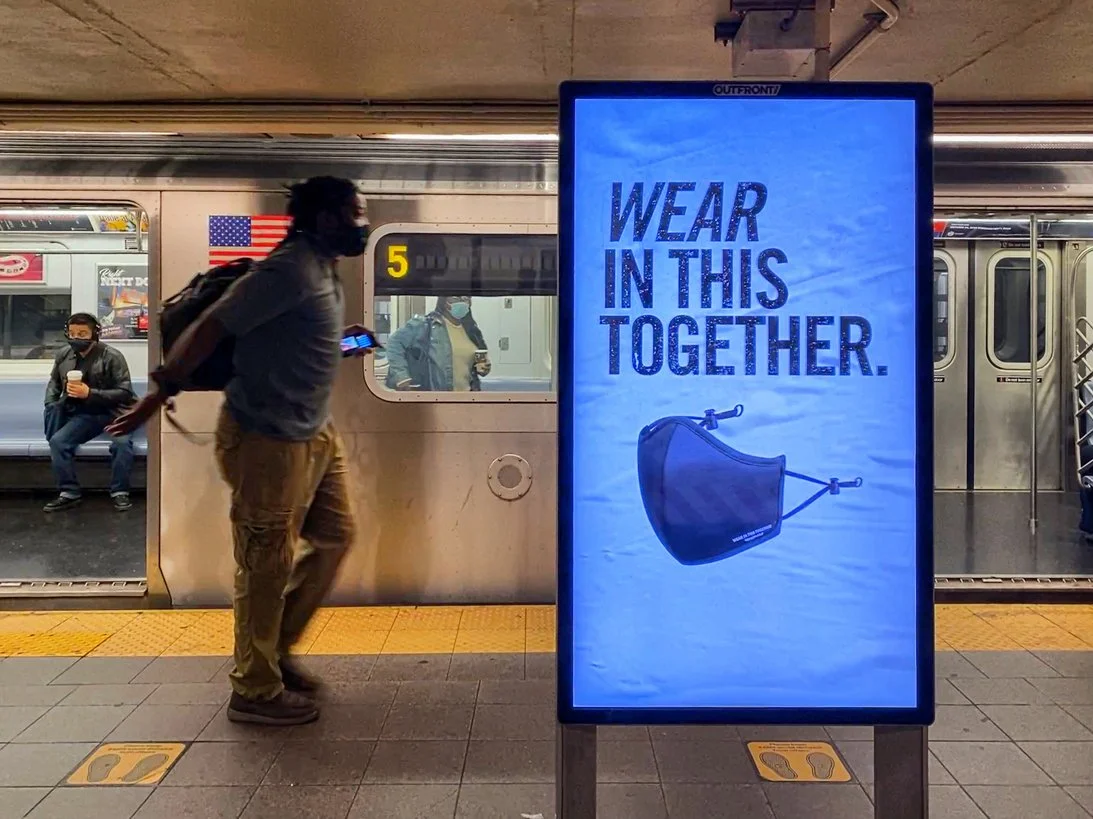
As the city moved through its phased reopening, the MTA gradually increased service from the Essential Service Plan that had remained in operation throughout the shutdown. Beginning May 6, overnight subway service was suspended from 1 to 5 a.m. so train cars and stations could be disinfected; daytime subway and bus service continued for essential workers and other riders. Trains and buses remained strikingly empty as riders followed mask requirements and practiced social distancing. Riding the subway during what had once been rush hour felt dreamlike—an uncanny mix of silence, caution, and lingering fear.
By December 2020, the first COVID-19 vaccinations were being administered. New York’s program to vaccinate nursing-home residents and staff began on December 21, bringing one chapter of uncertainty toward a close while opening the next.
TURN ON YOUR SOUND
Sound is an equal part of the experience
Protests Break Out in the Middle of a Pandemic © 2023 Masashi Ohtsu all rights reserved
On May 25, 2020, amid the COVID-19 pandemic and citywide lockdown, George Floyd, an African American man, was murdered by Minneapolis police officer Derek Chauvin. Video of the officer kneeling on Floyd’s neck for more than nine minutes prompted widespread outrage and protests locally, nationally, and internationally. On May 28, protesters gathered in Union Square Park in Manhattan and marched to City Hall. Although the demonstrations were largely peaceful, conflicts occurred between protesters and police, businesses were looted and storefronts were damaged during several nights of unrest, and New York City imposed an 11 p.m. curfew on June 1. The protests continued throughout June.
On June 8, 2020, New York City entered Phase One of reopening. Construction, manufacturing, wholesale trade, agriculture, and retail limited to curbside or in-store pickup resumed under mandatory safety plans, employee health screening, distancing, face-covering, hygiene, and cleaning requirements. On June 24, New York, New Jersey, and Connecticut announced a separate travel advisory requiring people arriving from states with significant community spread to quarantine for fourteen days. New York City continued moving through later reopening phases based on public-health indicators, including infections and hospitalizations.
Later phases broadened the activities permitted to resume, subject to industry-specific safety rules. The City of New York’s official reopening guide, linked below, records the dates, sectors, and requirements for each phase.




Historical context and sources
U.S. Department of Justice — George Floyd case record
New York Attorney General — NYC protest report
NYC Department of Investigation — Protest response report
City of New York — Official reopening guide
New York State — June 2020 travel advisory
MTA — 2020 Operations Plan
The New York Times — New York’s phased reopening
CDC Museum — COVID-19 Timeline
BMM Gallery — Full source notes and preservation record
© 2025 Masashi Ohtsu all rights reserved